






Comprehensive Analysis of India’s Union Budget 2024-25: Tax Reforms, Economic Growth, and Key Highlights
Contents
- 1 India’s Union Budget 2024-25
- 1.1 Comprehensive Analysis of India’s Union Budget 2024-25: Tax Reforms, Economic Growth, and Key Highlights
- 1.2 Introduction to the New Tax Regime
- 1.3 Economy Overview and Middle-Class Expectations
- 1.4 Revised Tax Structure
- 1.5 Political Reactions
- 1.6 Abolition of Angel Tax
- 1.7 Standard Deduction and Capital Gains Tax Exemptions
- 1.8 Comprehensive Review of the Income Tax Act, 1961
- 1.9 Changes in Customs Duty
- 1.10 Urban Development Initiatives
- 1.11 Street Food Hubs and Flood Control Measures
- 1.12 Nine Priorities and Four Pillars of the Government
- 1.13 Financial Support for Andhra Pradesh and Bihar
- 1.14 Education, Employment, and Skilling
- 1.15 Inflation and Economic Stability
- 1.16 Expectations and Market Reactions
- 1.17 Opposition’s Call for Addressing Inflation and Unemployment
- 1.18 Symbolic Gestures and Pre-Budget Rituals
- 1.19 Jammu and Kashmir Budget
- 1.20 Economic Survey Insights
- 1.21 Technology and Job Market
- 1.22 Paperless Budget
- 1.23 Market Expectations and Capital Gains Tax
- 1.24 Key Fiscal Numbers
- 1.25 Personal Income Tax as a Revenue Source
- 1.26 Expert Opinions on Tax Relief
- 1.27 Comparison of Old Budget Rules and New Budget Rules
- 1.28 Income Tax Structure
- 1.29 Standard Deduction
- 1.30 Capital Gains Tax Exemption
- 1.31 Angel Tax
- 1.32 Customs Duty
- 1.33 Income Tax Act Review
- 1.34 Urban Development Initiatives
- 1.35 Flood Control Measures for Bihar
- 1.36 Special Financial Support for Andhra Pradesh
- 1.37 Allocations for Education, Employment, and Skilling
- 1.38 Key Economic Indicators
- 1.39 Conclusion
- 1.40 FAQs
- 1.41 India’s Union Budget 2024-25
- 1.42 Budget 2024: Cheaper and Costlier Items List
India’s Union Budget 2024-25
Comprehensive Analysis of India’s Union Budget 2024-25: Tax Reforms, Economic Growth, and Key Highlights
Introduction to the New Tax Regime
The Union Finance Minister of India, Nirmala Sitharaman, presented the Union Budget for the fiscal year 2024-25 in the Lok Sabha on July 23, 2024. This was her seventh consecutive budget, a notable milestone as she surpassed Morarji Desai’s record of six consecutive budgets. The announcement focused on several key areas, with significant changes proposed in the tax structure under the new regime. The main objective of these changes is to provide relief to taxpayers, stimulate consumer spending, and address economic growth, India’s Union Budget 2024-25.
Economy Overview and Middle-Class Expectations
The Indian economy expanded by 8.2% in the past fiscal year. Despite this robust growth, private consumption, which accounts for more than half of the country’s GDP, only grew by 4%. This slower growth rate in private consumption highlights a disparity between overall economic growth and individual spending power. To address this issue, the government considered reducing personal income tax rates, India’s Union Budget 2024-25 , particularly for individuals with annual earnings between ₹5 lakh and ₹15 lakh, who are currently taxed at rates ranging from 5% to 30%. This demographic has a high propensity to spend, and tax relief could potentially stimulate more consumer spending, boosting economic activity further.
Revised Tax Structure
Under the revised tax structure announced by Sitharaman:
- Income up to ₹3 lakh is exempt from tax.
- Income between ₹3 lakh and ₹7 lakh is taxed at 5%.
- Income between ₹7 lakh and ₹10 lakh is taxed at 10%.
- Income between ₹10 lakh and ₹12 lakh is taxed at 15%.
- Income between ₹12 lakh and ₹15 lakh is taxed at 20%.
- Income above ₹15 lakh is taxed at 30%.
These revisions are expected to save taxpayers up to ₹17,500 annually, depending on their income bracket.
Political Reactions
The announcement sparked varied reactions from political figures. Congress MP Rahul Gandhi criticized the budget, labeling it the “Kursi Bachao Budget,” implying that it was designed to appease political allies and crony capitalists without providing substantial relief to the common man. He claimed that the budget included hollow promises and was a copy of previous Congress manifestos and budgets. Other Congress leaders, India’s Union Budget 2024-25 ,like P Chidambaram, acknowledged that some of the budget’s proposals, such as the Employment-linked Incentive (ELI) and the Apprenticeship scheme, were indeed reflective of their party’s manifesto.
Abolition of Angel Tax
One of the significant highlights of the budget was the proposal to abolish the “angel tax” for all classes of investors. The angel tax is a levy on the investment received by startups from angel investors. This tax has been a contentious issue, and its abolition is seen as a positive move to encourage investment in startups and foster innovation.
Standard Deduction and Capital Gains Tax Exemptions
Sitharaman announced an increase in the standard deduction to ₹75,000 under the new tax regime. Additionally, she proposed increasing the exemption limit for capital gains tax on certain assets to ₹1.5 lakh. These measures are intended to provide further relief to taxpayers and encourage investment in various asset classes.
Comprehensive Review of the Income Tax Act, 1961
A comprehensive review of the Income Tax Act of 1961 was also proposed to minimize litigations. This review aims to simplify the tax code, making it easier for taxpayers to comply with tax laws and reducing the burden of disputes and legal battles.

Changes in Customs Duty
The budget proposed a reduction in basic customs duty on mobile phones and chargers to 15%. Sitharaman also mentioned plans to rationalize and simplify the customs duty structure over the next six months. These changes are aimed at reducing the cost of electronics and making them more affordable for consumers.
Urban Development Initiatives
The finance minister unveiled several initiatives to transform cities into dynamic growth hubs. These measures focus on the orderly development of peri-urban areas, creative redevelopment of brownfields, and significant improvements in infrastructure. Fourteen large cities with populations exceeding 30 lakh will develop Transit-Oriented Development (TOD) plans, which integrate land use and transport planning to promote sustainable urban growth, India’s Union Budget 2024-25.
Street Food Hubs and Flood Control Measures
Sitharaman proposed setting up street food hubs in select cities to boost local economies and provide livelihood opportunities. She also announced ₹11,500 crore for flood control measures in Bihar, addressing a critical issue faced by the state.
Nine Priorities and Four Pillars of the Government
The budget outlined nine priorities aimed at generating ample opportunities in the economy. These priorities include productivity, jobs, social justice, urban development, energy security, infrastructure, innovation, and reforms. The government’s focus on these areas is designed to create a holistic and inclusive growth model.
Financial Support for Andhra Pradesh and Bihar
Recognizing the capital needs of Andhra Pradesh, the government proposed special financial support through multilateral agencies, with ₹15,000 crore arranged for the current fiscal year. Additionally, a significant allocation of ₹26,000 crore was proposed for various road projects in Bihar, India’s Union Budget 2024-25 ,including the development of an industrial node at Gaya and several key expressways and highways.
Education, Employment, and Skilling
The budget allocated ₹1.48 lakh crore for education, employment, and skilling. This investment aims to equip the workforce with the necessary skills and education to thrive in a rapidly evolving job market and support the country’s development goals.
Inflation and Economic Stability
Sitharaman emphasized that India’s economic growth continues to be an exception globally, with low and stable inflation moving towards a 4% target. The budget aims to maintain this stability while fostering growth and development.
Expectations and Market Reactions
The budget presentation was preceded by various expectations from the public and market analysts. Key expectations included reductions in LPG and petrol prices, revised income tax slabs, and measures to control inflation. The Sensex and Nifty showed positive movements in early trade, reflecting investor optimism.
Opposition’s Call for Addressing Inflation and Unemployment
Opposition leaders urged the finance minister to address pressing issues such as inflation and unemployment. They highlighted the need for the government to focus on the concerns of the common people, including the rising prices of essential commodities and the lack of employment opportunities.
Symbolic Gestures and Pre-Budget Rituals
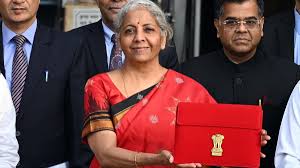
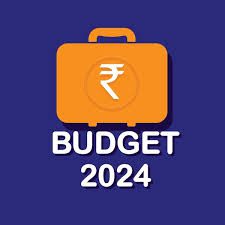
The budget day saw several symbolic gestures, including President Droupadi Murmu offering ‘dahi-chini’ (curd-sugar) to Nirmala Sitharaman, considered auspicious before she left for Parliament. Sitharaman also continued the tradition of carrying the budget documents in a ‘bahi-khata’-styled pouch, a practice she introduced in 2019 to replace the traditional leather briefcase.
Jammu and Kashmir Budget
In addition to the Union Budget, Sitharaman also presented the budget for Jammu and Kashmir for the fiscal year 2024-25. This marks the fifth budget for the Union Territory after the abrogation of Article 370.
Economic Survey Insights
The Economic Survey preceding the budget presentation provided crucial insights into the state of the economy. It cautioned against the risks of speculative trading and unrealistic return expectations, India’s Union Budget 2024-25 ,emphasizing the need for realistic market conditions and prudent fiscal policies. The survey also highlighted the potential impact of global geopolitical conflicts on supply chains and inflation.
Technology and Job Market
The Economic Survey discussed the impact of generative AI on the job market. While AI can boost productivity and create new job opportunities in certain sectors, it also poses the risk of job displacement in others. The survey underscored the importance of political decisions in ensuring that technological advancements benefit everyone and do not exacerbate inequalities.
Paperless Budget
Continuing the trend of the past three years, Sitharaman presented the budget in a paperless format. This move towards digital documentation is part of the government’s broader push towards digitization and environmental sustainability.
Market Expectations and Capital Gains Tax
The budget’s impact on the stock market was a key area of focus, particularly any changes in the capital gains tax. Speculations about an increase in capital gains tax to discourage risky investments were prevalent, although such measures could potentially affect market sentiment.
Key Fiscal Numbers
The budget included several key fiscal projections:
- Nominal GDP growth for the current fiscal year is estimated at 10.5%, reaching ₹327.7 trillion.
- Real GDP growth is projected at 7.2%.
- Gross borrowing for the current financial year is budgeted at ₹14.13 lakh crore.
- GST collection is estimated to rise to ₹10.68 lakh crore.
- Gross tax revenue is projected at ₹38.31 lakh crore.
- Planned capital expenditure is budgeted at ₹11.1 lakh crore.
- The fiscal deficit is projected at 5.1%, with a target to reduce it to 4.5% of GDP by FY26.
Personal Income Tax as a Revenue Source
Personal income tax has become the largest revenue source for the Indian government, surpassing corporate tax and GST. This shift highlights the increasing importance of personal income tax in the government’s fiscal strategy.
Expert Opinions on Tax Relief
Despite expectations for significant tax relief, some experts predicted only minor adjustments in personal taxes. These adjustments are anticipated to cost the exchequer no more than 0.1% of GDP, reflecting a cautious approach to fiscal management.

Comparison of Old Budget Rules and New Budget Rules
The Union Budget 2024-25, presented by Finance Minister Nirmala Sitharaman, introduced several changes aimed at simplifying the tax structure and providing relief to taxpayers. This comparison highlights the key differences between the old budget rules and the new budget rules, particularly focusing on income tax structures, standard deductions, capital gains exemptions, and other significant changes.
Income Tax Structure
Old Budget Rules
The old tax regime had more complex tax slabs and included various deductions and exemptions to reduce taxable income. The tax slabs were as follows:
- ₹0 – ₹2.5 lakh: Nil
- ₹2.5 – ₹5 lakh: 5%
- ₹5 – ₹10 lakh: 20%
- Above ₹10 lakh: 30%
Additionally, taxpayers could claim deductions under Section 80C, Section 80D, and other sections, which could significantly reduce their taxable income.
New Budget Rules
The new tax regime simplifies the tax structure with revised slabs and fewer deductions:
- ₹0 – ₹3 lakh: Nil
- ₹3 – ₹7 lakh: 5%
- ₹7 – ₹10 lakh: 10%
- ₹10 – ₹12 lakh: 15%
- ₹12 – ₹15 lakh: 20%
- Above ₹15 lakh: 30%
The new regime aims to reduce the complexity of filing taxes and increase disposable income by providing a straightforward tax structure.
Standard Deduction
Old Budget Rules
The standard deduction was set at ₹50,000 for salaried individuals and pensioners, which could be claimed irrespective of other deductions.
New Budget Rules
The new budget increases the standard deduction to ₹75,000, offering additional relief to taxpayers and further reducing their taxable income.
Capital Gains Tax Exemption
Old Budget Rules
Under the old regime, the exemption limit for capital gains tax on certain assets was ₹1 lakh.
New Budget Rules
The new budget increases the exemption limit for capital gains tax on specified assets to ₹1.5 lakh, encouraging more investment in these assets.
Angel Tax
Old Budget Rules
The angel tax was imposed on investments received by startups from angel investors, which was seen as a deterrent to startup funding.
New Budget Rules
The new budget abolishes the angel tax, removing this hurdle for startups and making it easier for them to attract investments and foster innovation.
Customs Duty
Old Budget Rules
Customs duty on mobile phones and chargers was higher, contributing to the overall cost of these goods.
New Budget Rules
The new budget proposes to reduce the basic customs duty on mobile phones and chargers to 15%, aiming to make electronic goods more affordable and boost the domestic electronics industry.
Income Tax Act Review
Old Budget Rules
The Income Tax Act, 1961, had not undergone a comprehensive review in recent years, leading to various ambiguities and litigations.
New Budget Rules
The new budget announces a comprehensive review of the Income Tax Act, 1961, to minimize litigations and simplify tax administration, creating a more taxpayer-friendly environment.
Urban Development Initiatives
Old Budget Rules
Urban development initiatives were less focused on comprehensive, sustainable growth.
New Budget Rules
The new budget introduces initiatives to transform cities into dynamic growth hubs, including the development of peri-urban areas, creative redevelopment of brownfields, and significant infrastructure improvements. Fourteen large cities with populations exceeding 30 lakh will develop Transit Oriented Development (TOD) plans.
Flood Control Measures for Bihar
Old Budget Rules
The budget allocations for flood control in Bihar were lower, with limited projects focusing on flood management.
New Budget Rules
The new budget allocates ₹11,500 crore for flood control measures in Bihar, aiming to improve infrastructure and implement effective flood management systems.
Special Financial Support for Andhra Pradesh
Old Budget Rules
Special financial support for Andhra Pradesh was less structured and lower in allocation.
New Budget Rules
The new budget proposes special financial support through multilateral agencies, with an initial ₹15,000 crore arranged for the current fiscal year and additional funds expected in the future.
Allocations for Education, Employment, and Skilling
Old Budget Rules
Allocations for education, employment, and skilling were lower and less focused on comprehensive development.
New Budget Rules
The new budget allocates ₹1.48 lakh crore for education, employment, and skilling initiatives, supporting various programs designed to enhance educational outcomes, create job opportunities, and develop skills necessary for the modern economy.
Key Economic Indicators
Old Budget Rules
- Nominal GDP Growth: Lower estimates compared to the new budget
- Borrowing: Higher borrowing rates with less focus on fiscal discipline
- GST Collection: Lower projections for GST collections
New Budget Rules
- Nominal GDP Growth: Estimated at 10.5%, reaching ₹327.7 trillion
- Borrowing: Gross borrowing budgeted at ₹14.13 lakh crore
- GST Collection: Expected to rise to ₹10.68 lakh crore
- Fiscal Deficit: Projected to reduce to 5.1% of GDP
Conclusion
The Union Budget 2024-25 presented by Nirmala Sitharaman introduced several significant changes aimed at providing tax relief, stimulating economic growth, and addressing critical issues such as urban development, infrastructure, education, and employment. The comprehensive review of the Income Tax Act, the abolition of the angel tax, and the focus on urban and regional development reflect the government’s commitment to fostering a conducive environment for growth and innovation. While the budget received mixed reactions from various political and economic stakeholders, it set the stage for India’s continued economic progress and development. India’s Union Budget 2024-25
This detailed explanation provides an in-depth understanding of the key announcements and their potential impact on the economy, taxpayers, and various sectors.
FAQs
What are the key changes in the new tax regime? The new tax regime introduces revised tax slabs with rates ranging from nil to 30%, depending on income levels. It also includes an increased standard deduction of ₹75,000.
How will the abolition of the angel tax benefit startups? Abolishing the angel tax removes a significant hurdle for startups, making it easier for them to attract investments and fostering a more supportive environment for innovation and growth.
What is the new standard deduction limit? The new standard deduction limit under the revised tax regime is ₹75,000.
How does the new capital gains tax exemption work? The exemption limit for capital gains tax on certain assets has been increased to ₹1.5 lakh, encouraging long-term investments in specified assets.
What are the government’s plans for urban development? The government plans to transform cities into dynamic growth hubs through initiatives like the orderly development of peri-urban areas, creative redevelopment of brownfields, and significant infrastructure improvements, India’s Union Budget 2024-25 particularly in large cities with populations exceeding 30 lakh.












1 comment