






DMart’s 5% Share Dip: Insights from Q2 Business Update
Contents
DMart Q2 business update
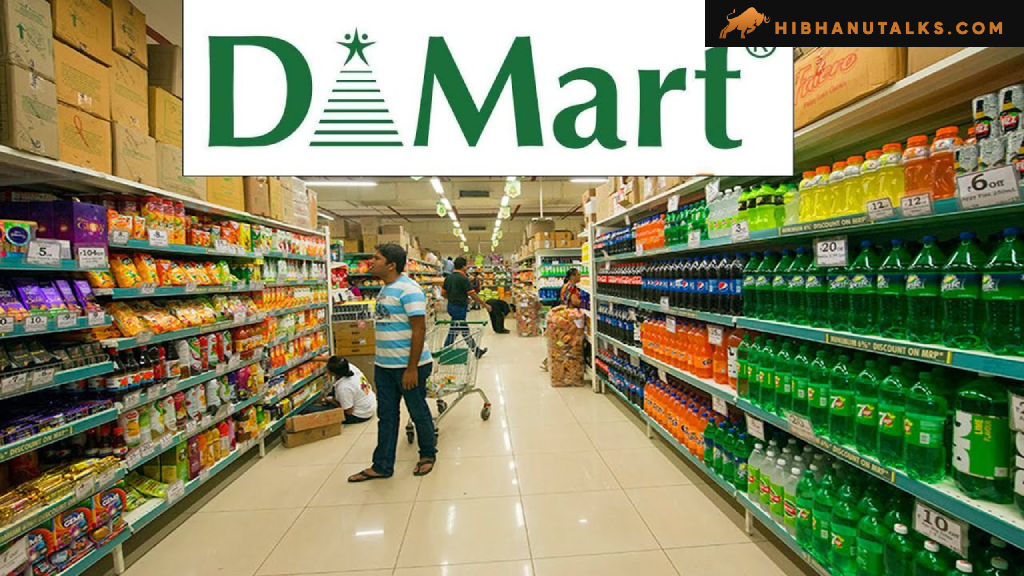
Avenue Supermarts, the parent company of DMart, saw its shares fall 5% to a three-month low of ₹4,703 on October 4, 2024, following the release of its Q2 FY25 business update. This decline came as analysts remained cautious about the company’s performance, despite reporting revenue growth. The update reflected mixed reactions from global brokerage firms, with some maintaining a ‘sell’ rating, while others had more optimistic views.

Key Details of DMart’s Q2 Business Update
- Revenue Growth:
- DMart reported standalone revenue of ₹14,050.32 crore for the September 2024 quarter (Q2FY25), reflecting a 14.2% year-on-year (YoY) growth from ₹12,307.72 crore in the same quarter last year (Q2FY24).
- This growth, while positive, was below analysts’ expectations, with some expecting higher growth rates, contributing to the dip in stock price.
- Store Expansion:
- As of September 30, 2024, DMart operated 377 stores, reflecting its continuous expansion, though analysts have concerns about future growth targets for store additions.
- Share Price Reaction:
- Following the release of the business update, DMart’s stock price fell 5% to ₹4,703 per share, marking a three-month low. The market reaction stemmed from the update’s failure to meet analysts’ revenue growth expectations.
- Analyst Ratings and Target Prices:
- Citi and Goldman Sachs maintained a ‘sell’ rating, citing slower-than-expected revenue growth and challenges from increasing competition in the retail sector:
- Citi has a target price of ₹3,350, highlighting that the 14.2% YoY growth was lower than its estimate of 19%.
- Goldman Sachs set a target price of ₹4,050, pointing to a slowdown in same-store sales growth (SSSG) and competition from quick commerce players.
- On the optimistic side, Morgan Stanley and Macquarie maintained an ‘overweight’ rating on the stock, with target prices of ₹5,769 and ₹5,600, respectively, emphasizing DMart’s long-term growth potential despite slower revenue growth.
- Bernstein previously gave an overweight rating with a target price of ₹6,300, highlighting DMart’s position to benefit from rising incomes and the ongoing shift from unorganised to organised retail.
- Citi and Goldman Sachs maintained a ‘sell’ rating, citing slower-than-expected revenue growth and challenges from increasing competition in the retail sector:
- Concerns Raised by Analysts:
- Analysts from Citi and Goldman Sachs noted a moderation in growth, particularly in same-store sales growth (SSSG), driven by competition from quick commerce players.
- They also raised concerns about the risk to DMart’s store addition target and the impact of slower revenue per store growth. Over the past five years, DMart’s revenue per store showed a 2.9% CAGR, with only 2.2% YoY growth in this quarter, falling short of expectations.
- Optimistic Views from Other Firms:
- While some analysts remained cautious, Morgan Stanley and Macquarie emphasized the operational improvement in DMart’s business, albeit at a slower pace. They maintained a positive outlook on DMart’s long-term prospects.
- Bernstein maintained that DMart has a strong position in India’s retail market, benefiting from the shift towards organised retail and increasing consumer incomes. The firm projected that DMart has access to a $600 billion total addressable market (TAM).

Advantages of DMart’s Performance and Outlook
- Steady Revenue Growth: Despite falling short of some expectations, DMart reported solid 14.2% YoY growth in revenue, demonstrating its ability to grow in a competitive market.
- Expanding Store Network: With 377 stores as of Q2 FY25, DMart continues to expand its footprint, indicating ongoing efforts to capture market share in the retail sector.
- Long-Term Market Potential: According to Bernstein, DMart stands to benefit from rising incomes in India and the shift from unorganised to organised retail. Its access to a $600 billion TAM positions it for substantial growth in the coming years.
- Operational Improvements: Though growth has slowed, Morgan Stanley and Macquarie note improvements in DMart’s operational metrics, showing the company’s efforts to optimize its performance.
Disadvantages and Risks in DMart’s Current Performance
- Below-Expectations Revenue Growth: DMart’s 14.2% revenue growth fell short of Citi’s 19% estimate, contributing to market disappointment and a drop in the share price.
- Same-Store Sales Growth (SSSG) Slowdown: The slowdown in SSSG due to competition from quick commerce players is a concern for analysts like Goldman Sachs, potentially limiting DMart’s revenue growth in the near term.
- Competitive Pressures: As quick commerce players continue to grow, DMart faces increased competition in India’s retail market, which could impact its future revenue growth.
- Risk to Store Expansion Targets: Analysts, including those at Goldman Sachs, have raised concerns about DMart’s ability to meet its store addition targets, especially in the face of competition and evolving market conditions.
- Valuation Concerns: Citi and Goldman Sachs believe that DMart’s current valuation may be overinflated, especially given the slower revenue growth and rising competition.

Conclusion
The 5% dip in DMart’s shares to a three-month low reflects market concerns over the company’s slower-than-expected revenue growth and competitive pressures. While some brokerage firms remain cautious, others maintain an optimistic outlook, citing DMart’s long-term potential in the Indian retail market. With a growing store network and access to a $600 billion TAM, DMart remains a key player, though it must address competition and operational challenges to maintain its growth trajectory.
FAQs
- Why did DMart shares dip by 5%?
- DMart shares dipped following its Q2 FY25 business update, which reported 14.2% YoY revenue growth, falling short of some analysts’ expectations.
- What is the current share price of DMart?
- As of October 4, 2024, DMart’s share price was ₹4,703, marking a 5% drop and a three-month low.
- What ratings have analysts given DMart stock?
- Citi and Goldman Sachs have maintained ‘sell’ ratings, while Morgan Stanley, Macquarie, and Bernstein remain positive with ‘overweight’ ratings.
- What are the concerns about DMart’s growth?
- Analysts have raised concerns about slower-than-expected revenue growth, competition from quick commerce players, and risks to the company’s store expansion targets.
- What is DMart’s growth potential?
- Despite current challenges, firms like Bernstein believe that DMart has access to a $600 billion TAM and stands to benefit from rising consumer incomes and the shift towards organised retail.
DMart Q2 business update
Power Grid’s ₹565 Crore Order Boosts Transformers and Rectifiers—Stock Rallies by 5%













2 comments