






How to Calculate Compound Interest: A Step-by-Step Guide for Maximizing Your Returns

Contents
- 1 Calculate compound interest
- 1.1 How to Calculate Compound Interest: A Step-by-Step Guide for Maximizing Your Returns
- 1.1.1 1. What is Compound Interest?
- 1.1.2 2. Understanding the Compound Interest Formula
- 1.1.3 3. Step-by-Step Guide to Calculating Compound Interest
- 1.1.4 4. Real-Life Examples of Compound Interest Calculations
- 1.1.5 5. The Power of Compound Interest Over Time
- 1.1.6 6. Factors that Affect Compound Interest
- 1.1.7 7. Tools and Calculators for Compound Interest
- 1.1.8 8. Pros and Cons of Compound Interest
- 1.1.9 Conclusion
- 1.1.10 FAQs:
- 1.1.10.1 1.What is compound interest?
- 1.1.10.2 2.How does compound interest differ from simple interest?
- 1.1.10.3 3.What is the formula for compound interest?
- 1.1.10.4 4.What does each part of the formula represent?
- 1.1.10.5 5.How often can interest be compounded?
- 1.1.10.6 6.How does the compounding frequency affect returns?
- 1.1.10.7 7.Can I calculate compound interest manually?
- 1.1.10.8 8.Why is compound interest beneficial for long-term investing?
- 1.1.10.9 9.What are some practical uses of compound interest?
- 1.1.10.10 10.How does the Rule of 72 relate to compound interest?
- 1.2 Calculate compound interest
- 1.3 Maruti Suzuki Q2FY25 Performance Preview: Expected Revenue and Profit Impact Amid Demand Slowdown
- 1.1 How to Calculate Compound Interest: A Step-by-Step Guide for Maximizing Your Returns
Calculate compound interest
How to Calculate Compound Interest: A Step-by-Step Guide for Maximizing Your Returns
Introduce the concept of compound interest, highlighting its power in wealth growth and investments. Explain the basic idea of compounding, emphasizing how interest on interest leads to exponential growth over time.
1. What is Compound Interest?
- Define compound interest and differentiate it from simple interest.
- Explain how it allows investments to grow faster because interest is calculated on both the initial principal and the accumulated interest.
- Provide a real-world example to illustrate how compound interest works in everyday life, such as in savings accounts or mutual fund investments.
2. Understanding the Compound Interest Formula
- Introduce the compound interest formula:A=P×(1+rn)n⋅tA = P \times (1 + \frac{r}{n})^{n \cdot t}where:
- A = Final amount
- P = Principal (initial amount)
- r = Annual interest rate (decimal)
- n = Number of times interest is compounded per year
- t = Time (years)
- Explain each component in detail so readers understand what each variable represents.
3. Step-by-Step Guide to Calculating Compound Interest
Break down the calculation process to make it easy to follow.
- Step 1: Identify the principal amount (P).
- Explain what the principal is and how it serves as the foundation of the calculation.
- Step 2: Determine the annual interest rate (r) and convert it to decimal form.
- Illustrate with examples, like 5% as 0.05, to avoid common mistakes.
- Step 3: Select the compounding frequency (n).
- Discuss different compounding frequencies, such as daily, monthly, quarterly, and annually, and their impact on interest earned.
- Step 4: Determine the time period in years (t).
- Emphasize that time plays a crucial role in maximizing compound interest gains.
- Step 5: Substitute values into the formula and solve.
- Walk readers through a calculation example, showing each step clearly for accuracy.

4. Real-Life Examples of Compound Interest Calculations
Provide detailed examples of calculating compound interest based on different scenarios:
- Example 1: Simple savings account with annual compounding.
- Example 2: Investment with monthly compounding, such as in a retirement account.
- Example 3: Quarterly compounding in a fixed deposit.
These examples will give readers practical insights into how compound interest grows based on frequency and duration.
5. The Power of Compound Interest Over Time
- Explain the “Rule of 72,” a quick way to estimate how long it takes for an investment to double at a given interest rate.
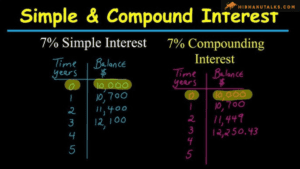
- Show graphs or tables to visualize how a small principal can grow significantly over time with compounding, especially with long-term investments.
6. Factors that Affect Compound Interest
- Interest Rate: Higher rates lead to faster growth.
- Compounding Frequency: More frequent compounding results in greater accumulated interest.
- Time Period: Longer durations lead to exponential growth.
- Principal: A larger initial investment yields more compound interest over time.
This section will help readers understand the importance of each factor in maximizing their returns through compounding.

7. Tools and Calculators for Compound Interest
- List some popular online compound interest calculators, apps, and tools, guiding readers on how to use these for quick calculations.
- Mention how these tools can help with planning financial goals, investments, or savings.
8. Pros and Cons of Compound Interest
- Pros: Potential for exponential growth, ideal for long-term goals, beneficial in high-frequency compounding.
- Cons: Can also work against you in cases of debt (compound interest on loans).
- This section will give a balanced view, ensuring readers understand both sides of compound interest.
Conclusion
Summarize the key takeaways, emphasizing the simplicity of calculating compound interest and its benefits in growing wealth. Encourage readers to apply compound interest in their savings or investments for future gains.
FAQs:
1.What is compound interest?
A. Compound interest is interest calculated on the initial principal and on accumulated interest.
2.How does compound interest differ from simple interest?
A. Simple interest is calculated on the principal only, while compound interest includes accumulated interest.
3.What is the formula for compound interest?
A. The formula is A=P×(1+rn)n⋅tA = P \times (1 + \frac{r}{n})^{n \cdot t}.
4.What does each part of the formula represent?
A. P = Principal, r = Interest rate, n = Compounding frequency, t = Time (years).
5.How often can interest be compounded?
A. It can be compounded annually, semi-annually, quarterly, monthly, or daily.
6.How does the compounding frequency affect returns?
A. Higher compounding frequency results in higher returns due to more frequent interest additions.
7.Can I calculate compound interest manually?
A. Yes, using the formula, or you can use online calculators for ease.
8.Why is compound interest beneficial for long-term investing?
A. Compound interest grows investments exponentially over time, ideal for long-term gains.
9.What are some practical uses of compound interest?
A. Savings accounts, retirement accounts, fixed deposits, and investment growth.
10.How does the Rule of 72 relate to compound interest?
A. The Rule of 72 helps estimate the time required for an investment to double based on the interest rate.
Calculate compound interest
Maruti Suzuki Q2FY25 Performance Preview: Expected Revenue and Profit Impact Amid Demand Slowdown












1 comment