






Maximizing Compound Interest in Your Savings Account

Contents
- 1 Compound interest
- 1.1 Maximizing Compound Interest in Your Savings Account
- 1.1.1 Strategies to Maximize Compound Interest
- 1.1.2 Understanding the Impact of Compounding Frequency
- 1.1.3 Conclusion
- 1.1.4 FAQs:
- 1.1.4.1 1.What is compound interest?
- 1.1.4.2 2.How can I maximize compound interest in my savings account?
- 1.1.4.3 3.What types of savings accounts offer compound interest?
- 1.1.4.4 4.Is it better to withdraw interest earned or let it compound?
- 1.1.4.5 5.How often is interest compounded in savings accounts?
- 1.1.4.6 6.What is the difference between simple interest and compound interest?
- 1.1.4.7 7.How does the compounding frequency affect my savings?
- 1.1.4.8 8.Can I lose money in a savings account?
- 1.1.4.9 9.What is a high-yield savings account?
- 1.1.4.10 10.Are there any risks associated with high-yield savings accounts?
- 1.2 Compound interest
- 1.3 Insolation Energy Shares Jump 7.29% After Securing ₹500.50 Crore Contract
- 1.1 Maximizing Compound Interest in Your Savings Account
Compound interest
Maximizing Compound Interest in Your Savings Account
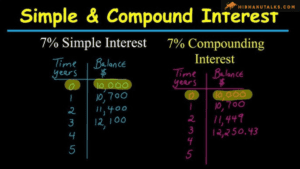
Compound interest is often referred to as the “interest on interest.” Unlike simple interest, which is calculated only on the principal amount, compound interest calculates interest on both the principal and the accumulated interest from previous periods. This mechanism allows your savings to grow at a faster rate, making it a powerful tool in personal finance.
For example, if you deposit ₹10,000 in a savings account with an annual interest rate of 5%, after one year, you’ll earn ₹500 in interest. In the second year, you will earn interest on ₹10,500, not just on the original ₹10,000. This cycle continues, leading to exponential growth of your savings over time.

Strategies to Maximize Compound Interest
1. Start Saving Early
One of the most effective ways to maximize compound interest is to start saving as early as possible. The longer your money is invested, the more time it has to grow through compounding. This principle is often illustrated by the concept of the “time value of money,” where the value of money today is greater than its value in the future due to its potential earning capacity.
2. Choose the Right Savings Account
Not all savings accounts offer the same interest rates. Look for accounts with competitive rates, preferably those that compound interest daily, monthly, or quarterly. Online banks often offer higher interest rates compared to traditional banks due to lower overhead costs. Compare different options and select the one that maximizes your potential earnings.
3. Make Regular Deposits
Consistently adding funds to your savings account can significantly enhance your compound interest earnings. Even small, regular deposits can accumulate over time, increasing your principal amount and, consequently, your interest earnings. Consider setting up an automatic transfer from your checking account to your savings account each month.
4. Avoid Withdrawals
Frequent withdrawals can undermine your ability to maximize compound interest. Every time you withdraw funds, you reduce your principal amount, which in turn decreases the interest you can earn. If possible, try to keep your savings untouched to allow them to grow.
5. Take Advantage of Tax-Advantaged Accounts
Explore tax-advantaged savings accounts such as Public Provident Fund (PPF) or Employee Provident Fund (EPF), which not only offer favorable interest rates but also tax benefits. The interest earned in these accounts is often exempt from tax, allowing your money to compound more efficiently.
Understanding the Impact of Compounding Frequency
The frequency with which interest is compounded can significantly affect your earnings. The more frequently interest is compounded, the more interest you earn. For example, an account that compounds monthly will yield more than one that compounds annually, even with the same interest rate.
Example:
- Annual Compounding: ₹10,000 at 5% for 5 years = ₹12,762.82
- Monthly Compounding: ₹10,000 at 5% for 5 years = ₹12,834.41
The difference may seem small, but over time and with larger sums, this can lead to substantial gains.
Conclusion
Maximizing compound interest in your savings account is a strategic process that involves choosing the right account, making regular deposits, and allowing your funds to grow over time. By understanding the principles of compounding and implementing effective saving strategies, you can enhance your financial growth and achieve your savings goals.
FAQs:
1.What is compound interest?
A. Compound interest is the interest calculated on the initial principal and the accumulated interest from previous periods.
2.How can I maximize compound interest in my savings account?
A. You can maximize it by starting early, choosing the right account, making regular deposits, avoiding withdrawals, and understanding compounding frequency.
3.What types of savings accounts offer compound interest?
A. Regular savings accounts, high-yield savings accounts, and tax-advantaged accounts like PPF and EPF typically offer compound interest.
4.Is it better to withdraw interest earned or let it compound?
A. To maximize compound interest, it’s better to let the interest compound rather than withdrawing it, as withdrawals reduce your principal amount.
5.How often is interest compounded in savings accounts?
A. Interest can be compounded annually, semi-annually, quarterly, monthly, or daily, depending on the bank and account type.
6.What is the difference between simple interest and compound interest?
A. Simple interest is calculated only on the principal amount, while compound interest is calculated on the principal and accumulated interest.
7.How does the compounding frequency affect my savings?
A. More frequent compounding leads to higher total interest earned. For example, monthly compounding typically earns more than annual compounding.
8.Can I lose money in a savings account?
A. While savings accounts are generally safe, factors like fees or inflation can erode your savings. It’s crucial to choose accounts with favorable terms.
9.What is a high-yield savings account?
A. A high-yield savings account offers a higher interest rate than a regular savings account, allowing for more effective compounding of your savings.
10.Are there any risks associated with high-yield savings accounts?
A. High-yield savings accounts are generally low-risk, but ensure the bank is FDIC-insured, and be aware of any fees that may offset earnings.
Compound interest












1 comment