






Key Terms Every Investor Should Know about Compound Interest

Contents
- 1 Compound Interest
- 1.1 Key Terms Every Investor Should Know about Compound Interest
- 1.1.1 1. Compound Interest
- 1.1.2 2. Principal Amount
- 1.1.3 3. Rate of Interest (Annual Percentage Rate)
- 1.1.4 4. Compounding Frequency
- 1.1.5 5. Future Value
- 1.1.6 6. Time Horizon
- 1.1.7 7. Effective Annual Rate (EAR)
- 1.1.8 8. Investment Returns
- 1.1.9 9. Inflation Rate
- 1.1.10 10. Rule of 72
- 1.1.11 Conclusion
- 1.1.12 FAQs:
- 1.1.12.1 1.What is compound interest?
- 1.1.12.2 2.How does compounding frequency affect my investments?
- 1.1.12.3 3.What is the principal amount?
- 1.1.12.4 4.Why is the rate of interest important?
- 1.1.12.5 5.What is future value?
- 1.1.12.6 6.What does time horizon mean in investing?
- 1.1.12.7 7.What is the effective annual rate (EAR)?
- 1.1.12.8 8.How do inflation rates impact my investments?
- 1.1.12.9 9.What is the Rule of 72?
- 1.1.12.10 10.Why should I care about investment returns?
- 1.2 Hindustan Zinc Share Price Surges 3.17%: Key Factors and Future Outlook
- 1.1 Key Terms Every Investor Should Know about Compound Interest
Compound Interest
Key Terms Every Investor Should Know about Compound Interest
Compound interest is a fundamental concept in finance that can significantly impact your investment returns. Understanding this concept, along with its associated key terms, is essential for every investor looking to grow their wealth over time. In this post, we will delve into the essential terms related to compound interest that every investor should be familiar with.
1. Compound Interest
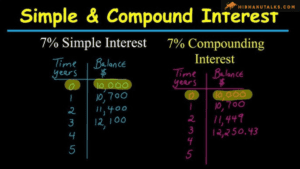
Definition: Compound interest is the interest calculated on the initial principal and also on the accumulated interest from previous periods. It differs from simple interest, which is only calculated on the principal amount.
Importance: Compound interest is often referred to as “interest on interest,” and it can lead to exponential growth of investments over time. The longer your money is invested, the more pronounced the effects of compounding become.
2. Principal Amount
Definition: The principal amount is the initial sum of money that is invested or loaned before any interest is applied.
Importance: Understanding your principal is crucial because it serves as the base for calculating interest. The larger the principal, the more interest you will earn over time due to compounding.
3. Rate of Interest (Annual Percentage Rate)
Definition: The rate of interest, often expressed as an annual percentage rate (APR), is the percentage at which interest is charged or earned on the principal.
Importance: The interest rate directly affects how much you can earn through compound interest. Higher rates lead to greater returns, making it essential to seek investments with competitive rates.
4. Compounding Frequency
Definition: Compounding frequency refers to how often the accrued interest is added to the principal balance. Common compounding frequencies include annually, semi-annually, quarterly, monthly, and daily.
Importance: The more frequently interest is compounded, the more total interest will be earned. For example, an investment compounded monthly will yield more than one compounded annually at the same interest rate.
5. Future Value
Definition: The future value (FV) of an investment is the amount of money that an investment will grow to over time, based on a specified interest rate and compounding frequency.
Importance: Understanding the future value helps investors set realistic goals for their investments and understand the potential growth of their money over time.
6. Time Horizon
Definition: Time horizon refers to the length of time an investor expects to hold an investment before taking the money out.
Importance: The time horizon is critical when considering compound interest, as investments with longer time horizons allow for more compounding periods, maximizing the potential growth of the investment.
7. Effective Annual Rate (EAR)
Definition: The effective annual rate (EAR) is the interest rate on an investment or loan that reflects the effects of compounding during a year.
Importance: EAR provides a more accurate representation of the true interest earned on an investment compared to the nominal rate, particularly when the compounding frequency is more than once per year.
8. Investment Returns
Definition: Investment returns refer to the gains or losses made on an investment over a period, typically expressed as a percentage of the initial investment.
Importance: Understanding returns, especially in relation to compound interest, helps investors evaluate the performance of their investments and make informed decisions about where to allocate funds.

9. Inflation Rate
Definition: The inflation rate measures the rate at which the general level of prices for goods and services rises, leading to a decrease in purchasing power.
Importance: Investors must consider the inflation rate when calculating the real return on their investments. If the rate of return is lower than the inflation rate, the purchasing power of the investment decreases over time.
10. Rule of 72
Definition: The Rule of 72 is a simple formula used to estimate the number of years required to double the investment at a fixed annual rate of return. By dividing 72 by the expected annual return, investors can quickly gauge the time needed for their investments to grow.
Importance: This rule provides a straightforward way for investors to understand the power of compounding and make informed investment choices.
Conclusion
Understanding these key terms related to compound interest is vital for every investor aiming to build wealth effectively. By grasping concepts like principal, compounding frequency, and future value, investors can make more informed decisions that align with their financial goals. Remember, the earlier you start investing, the greater the benefits of compound interest will be over time.
Invest wisely, and let your money work for you through the power of compounding!
FAQs:
1.What is compound interest?
A. Compound interest is interest calculated on both the initial principal and accumulated interest, leading to exponential growth of investments.
2.How does compounding frequency affect my investments?
A. More frequent compounding results in more interest being earned, leading to greater returns on your investment.
3.What is the principal amount?
A. The principal amount is the initial sum of money invested or loaned before interest is applied.
4.Why is the rate of interest important?
A. The rate of interest directly affects how much you earn through compound interest; higher rates yield greater returns.
5.What is future value?
A. Future value is the amount an investment will grow to over time, based on a specific interest rate and compounding frequency.
6.What does time horizon mean in investing?
A. Time horizon refers to the length of time an investor plans to hold an investment before cashing it out.
7.What is the effective annual rate (EAR)?
A. EAR reflects the true interest earned on an investment, taking into account the effects of compounding over a year.
8.How do inflation rates impact my investments?
A. Inflation decreases purchasing power, so if investment returns are lower than inflation, your investment’s real value diminishes.
9.What is the Rule of 72?
A. The Rule of 72 estimates the number of years required to double an investment at a fixed annual return by dividing 72 by the expected return.
10.Why should I care about investment returns?
A. Understanding investment returns helps you evaluate the performance of your investments and make informed decisions on fund allocation.












1 comment